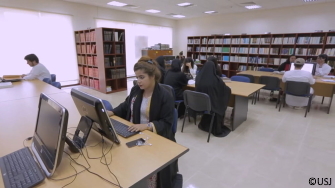
Dr Thomas Walford and Ausaf Abbas delivered a lecture on the Regulation of Financial Institutions to St Joseph University of Beirut in Dubai. The lecture was delivered to the law undergraduates and also explained the logic behind the current international regulatory environment and how it has changed over the last 70 years in the main financial jurisdictions.
The background
The two experts started by looking at the reasons for the original development of a regulatory framework being as a consequence of:
- Bank failures were common;
- Economies were adversely effected; and
- Innocent individuals lost substantial sums of money.
It became obvious to governments of developed financially based economies that:
- Orderly financial markets were vital to the operation of a healthy economy.
- Governments needed to provide a deposit protection system to preserve confidence in the retail market place.
Hence the requirement for regulation was born and very quickly became based on the three principal roles: Licencing, Supervision and Enforcement & Discipline. The primary role was to seek to ensure that all financial institutions had sufficient capital adequacy to weather any storm that may be thrown at them by markets so as to avoid the failure of the banks. Behind this was the need for excellent corporate governance and high credit ratings. Basel III, put in place following the global financial crisis of 2008, set out an improved framework to achieve this.
International regulatory bodies
The lecture then went on to look at the primary regulating institutions both those that had a global remit and those that were tasked with overseeing the US and UK markets. The role of the Financial Action Task Force (‘FATF’) as a body to control money laundering was discussed and International Organisation of Securities Commissions (‘IOSCO’) together with the EU system for policing the European Financial Institutions.
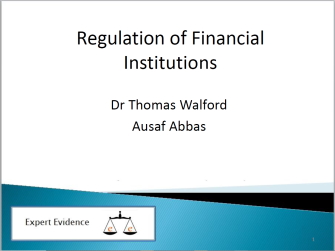 Click to download presentation
The US
The US was the first major country (second after Portugal) to introduce financial regulation after the crash of 1929, by providing Deposit Insurance via the FDIC through the Banking Act of 1933 (also known as Glass-Steagall). There followed the Deposit Protection via the Federal Deposit Insurance Corporation (‘FDIC’), Consumer Protection and Banking activity by Federal Reserve Board and the Truth in Savings Act (1991) and Currency Control via Office of the Comptroller of the Currency.
On the investment side regulation was enforced by the Securities and Exchange Commission (‘SEC’). The primary purpose of the SEC is to enforce the law against market manipulation. SEC enforces the Securities Act of 1933, the Trust Indenture Act of 1939, the Investment Company Act of 1940, the Investment Advisers Act of 1940, the Sarbanes–Oxley Act of 2002, and other statutes.
The UK
In the UK, regulation was originally in the hands of the Bank of England and in 2000 was handed over to the Financial Services Authority. In 2013 control reverted to the Bank of England and administered by the Prudential Regulatory Authority (‘PRA’) and the Financial Conduct Authority (‘FCA’). The PRA deals with banking capital adequancy and market integrity. The FCA provides detailed supervision of 58,000 firms and covers banks, mutual societies, investment managers, financial advisors, Deposit Protection via FSCS and acts as the Payments System Regulator.
For banking in the UK only specialist lending is regulated; such as for mortgages, payday loans, and retail lending. In addition for Retail customers there are firm rules concerning Treating Customers Fairly (‘TCF’) which were introduced in 2008.
For investment in the UK, the FCA Rules are laid out in the Conduct of Business Sourcebook (‘COBS’) which deals with all the main areas such as client categorisation, investment advice, research and investment agreement. The FCA also specifies how client communications should be managed both for one off reports and periodic reporting.

International Investment Banks
We used to have commercial and investment banks. There was an important distinction, but this has become increasingly blurred in the US by the repeal of Glass Steagall Act and the emergence of Global Universal Banks. The main activities of Investment Banks include; Investment Banking, Debt (Sales, Trading & Capital Markets), Equity (Sales, Trading & Capital Markets), Asset Management, Wealth Management and Research.
Regulation in the US has been via:
- Securities Exchange Act 1934 introduced to regulate securities exchanges and broker-dealers.
- Investment Company Act and Investment Advisers Act established in 1940.
- After the Credit Crunch of 2008, Dodd-Frank reforms introduced a plethora of new regulation of financial institutions.
In the UK, historical separation of commercial banking and investment banking is not as clearly defined as in the US. Both types of banks and their activities are covered by the Financial Services and Markets Act 2000 (‘FSMA’). UK regulatory framework has been considerably influenced by various European laws, which will change in the future due to Brexit, despite regulatory alignment.
Expert Evidence
Expert Evidence prides itself on assisting throughout the legal process where required and is a professional firm concentrating on the four main areas of dispute resolution; acting as expert witnesses in financial litigation, mediation, arbitration and adjudication. The firm has a civil, criminal and international practice and has advised in many recent cases. Areas of specialisation include banking, lending, regulation, investment, and tax.
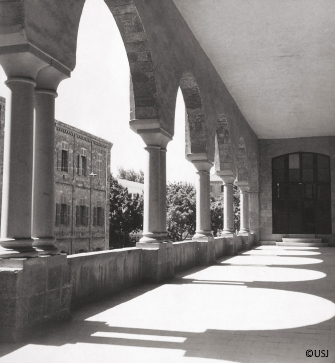
Saint Joseph University in Lebanon and Dubai (‘USJ’)
The University was established in 2008 as the first international branch of Saint Joseph University of Beirut. It was intended to be able to offer young Emirati students a prestigious Bachelor of Law program under the framework of the Edaad for Leaders Initiative.
The main sponsoring university is Saint Joseph University, a private Catholic research university in Beirut, Lebanon, founded in 1875 by the Jesuits.
Saint Joseph University ranks as one of the best universities in Lebanon (ranked with the American University of Beirut), and among the top academic institutions in the Middle East. Its alumni include numerous Lebanese presidents, ministers, philosophers, intellectuals, clerics and beyond. As Lebanon’s oldest and main French medium university, while promoting Lebanese culture, admission is open to all religious affiliations, and encourages trilingualism of French, Arabic and English. Medicine is one of its best known disciples through the affiliation with the university hospital, Hôtel-Dieu de France.
USJ has some 12,000 students enrolled and is served by an academic staff of 1,873 and support staff of 500, distributed over its 12 faculties, 24 institutes and schools across five campuses in Beirut, with regional university centres in Sidon, Tripoli and Zahlé in Lebanon , as well as the one foreign centre in Dubai.
USJ is the only university in the Middle East to adhere to the European ECTS university academic credits system, while also officially recognised by and in accord with the higher education law of Lebanon. It maintains some 150 various international agreements.
The university’s graduates are also highly respected in the professional legal field. Their success stories include a judicial role at the DIFC courts, legal, key administrative and researcher positions at top companies such as Mubadala Investment, Expo2020, Bank of Sharjah, KHDA, PWC, the Public Prosecution, Twofour54, the Supreme Legislation Committee of Dubai government, Al Tamimi & Company, Jumeirah Group and many others. Also, many graduates pursue their studies at world class universities including Oxford University, London Business School, University of Leeds, Georgetown University, Melbourne University, and others.
USJ Dubai, established in 2008, is an international campus to Saint Joseph University of Beirut established in 1875, accredited by Acquin and present in all the international and regional rankings. The main mission of the Dubai Campus is to prepare the legal elites of the United Arab Emirates and the region.
For more information about Saint Joseph University of Beirut: Link: Saint Joseph University – Beirut (usj.edu.lb)
For more information about Saint Joseph University Dubai Campus: Link: Saint-Joseph University Dubai – About (usj.edu.lb)
Disclaimer – Please confirm any of the above views with your solicitor. Expert Evidence takes no responsibility or provides any guarantee that the views above are correct for your particular case or jurisdiction.